
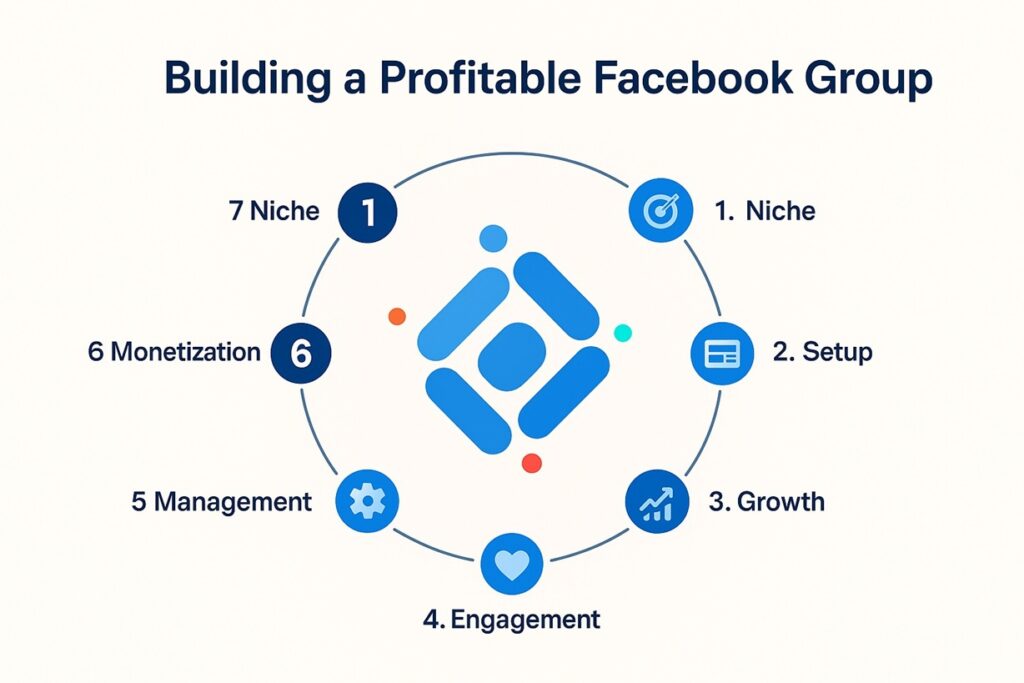
Facebook groups have evolved into one of the most effective tools for small businesses to connect with customers, nurture relationships, and build loyal communities. Unlike Facebook Pages, where reach is often restricted by algorithms unless you pay for ads, groups thrive on engagement and meaningful interactions. For small business owners, this means you can create a space where customers feel heard, valued, and inspired to take action—without constantly relying on paid advertising.
A well-managed Facebook community can help you:
-
Increase brand loyalty
-
Build a warm audience for product launches
-
Gain real-time feedback through polls and discussions
Whether you run a bakery, an online coaching business, or an e-commerce store, this guide will show you exactly how to grow, engage, and monetize your Facebook group step-by-step.
Why Facebook Groups Are a Powerful Tool for Business Growth
Community Building and Customer Loyalty
A Facebook group creates a direct communication channel between your business and your audience. By sharing valuable content, answering questions, and encouraging member contributions, you position yourself as an authority while fostering long-term loyalty.
Organic Reach vs. Paid Ads
While Facebook ads are effective, they cost money. Groups, on the other hand, still enjoy high organic reach—especially when you post interactive content like polls, challenges, and live videos.
Insights and Market Research Opportunities
Groups act like a free focus group. Through surveys, comment discussions, and polls, you can discover exactly what your audience wants—helping you refine your products, services, and Facebook group marketing strategy.
Laying the Groundwork Before Creating Your Group
Defining Your Purpose and Target Audience
Ask yourself: Why am I creating this group? A clear purpose—such as offering small business networking tips or exclusive product discounts—will guide your content and attract the right members.
Choosing a Niche That Aligns with Your Business Goals
A niche group will always outperform a generic one. For example:
❌ “Business Tips” → Too broad
✅ “Instagram Marketing for Boutique Owners” → Highly targeted
Setting Clear Objectives for Group Success
Set measurable goals like “500 members in three months” or “Weekly live training sessions.” These will help you track progress using Facebook Group Insights later.
Step 1: Creating Your Facebook Group the Right Way
Selecting the Right Group Type
-
Public: Great for visibility, but less exclusive.
-
Private: The sweet spot for most small businesses—exclusive, but easy to find.
-
Hidden: Best for paid memberships or VIP programs.
Writing an Attractive Group Description and Rules
Use your group description to:
-
Explain the group’s purpose
-
Highlight benefits for members
-
Include relevant keywords like “Facebook group monetization” or “social media growth”
Choosing a Memorable Group Name
Your name should be keyword-rich and benefit-focused. Example:
Instead of “Small Biz Tips,” use “Profitable Facebook Groups for Small Business Owners.”
Step 2: Designing a Professional and Engaging Group Cover Photo
Branding Your Group for Recognition
Use consistent colors, fonts, and your logo so members instantly recognize your brand.
Using Free and Paid Tools for Graphic Design
Tools like Canva and Fotor offer Facebook group cover templates optimized at 820×360 pixels.
Step 3: Structuring Your Group for Maximum Engagement
Setting Posting Guidelines and Moderation Rules
Establish clear boundaries to maintain quality discussions. Example: “No self-promotion outside of Promo Fridays.”
Organizing Content with Topics and Announcements
Tag posts by topic (“Tutorials,” “Q&A,” “Resources”) so members can easily navigate.
Pinning Key Posts and Welcome Messages
A pinned welcome post should outline group benefits, link to your website, and share a new member checklist.
Step 4: Growing Your Facebook Group Membership
Inviting Your Existing Network
Start with loyal customers, email subscribers, and Instagram followers.
Promoting Across Multiple Channels
-
Add a CTA link to your website footer
-
Include in your email signature
-
Promote via Instagram Stories and LinkedIn posts
Collaborating with Influencers
Partner with complementary brands to co-host live sessions and share each other’s groups.
Step 5: Driving Engagement and Building a Thriving Community
Creating Interactive Content
Host weekly polls, quizzes, and challenges to keep members coming back.
Hosting Live Q&A Sessions
Answer questions in real-time, share insider tips, and promote upcoming offers.
Encouraging User-Generated Content
Ask members to share testimonials, photos, or business wins—building trust and social proof.
Step 6: Monetizing Your Facebook Group
Selling Products and Services
Promote exclusive discounts or early-access offers to group members.
Affiliate Marketing
Share tools, software, or resources you genuinely use, and earn a commission for each referral.
Paid Memberships
Offer a VIP sub-group with training videos, templates, or personalized coaching.
Step 7: Tracking and Optimizing Your Group’s Performance
Using Facebook Group Insights
Check metrics like:
-
Active members
-
Most engaging posts
-
Member growth rate
Analyzing Trends
Identify which content types perform best—then create more of them.
Adjusting Strategies
If engagement drops, introduce a new challenge or themed posting day.
Best Practices for Managing a Profitable Facebook Group
-
Post consistently (use a scheduler like Hootsuite)
-
Keep promotion to 20% of posts, value to 80%
-
Encourage members to invite friends who match your target audience
Tools and Resources to Streamline Group Management
| Tool | Purpose | Example |
|---|---|---|
| Canva | Design visuals | Free/Paid |
| Hootsuite | Schedule posts | Paid |
| GroupTrack CRM | Manage leads | Paid |
| Google Forms | Collect feedback | Free |
Real-Life Examples of Profitable Facebook Groups
-
Boss Moms – Monetizes through courses & events
-
Freelance Travel Writers – Profits from training programs & job postings
Frequently Asked Questions (FAQs)
1. How long until a Facebook group becomes profitable?
With consistent strategy, 3–6 months is realistic.
2. Should I start free or paid?
Begin free to build trust, then introduce paid tiers.
3. How do I keep members engaged?
Regular events, interactive posts, and unique content.
4. Can I grow without ads?
Yes—use organic growth methods like networking & collaborations.
5. What’s more important—group size or activity?
Engagement matters more than total members.
6. Can I promote in other groups?
Only if allowed by their rules.
Conclusion
Building a profitable Facebook group for your small business is about community first, sales second. With the right Facebook group marketing strategy, consistent engagement, and smart monetization, you can turn your group into a loyal customer base that drives revenue for years.
For more on community growth strategies, visit Facebook’s official Group Management resources.