
How AI is Revolutionizing Customer Journey Mapping for Small Businesses in 2025
In the fast-paced world of business, understanding your customer’s journey is no longer just an advantage – it’s a necessity. As we step into 2025, small businesses are finding themselves at the forefront of a digital revolution, where artificial intelligence (AI) is transforming how they map, understand, and enhance customer experiences. Today, we’re diving into how AI is revolutionizing customer journey mapping, and why small businesses can’t afford to miss out on this opportunity.
What is Customer Journey Mapping?
Before we explore the role of AI, let’s take a moment to understand what customer journey mapping entails. According to Gartner, customer journey mapping is the process of capturing and visualizing the sequence of events your customers go through when interacting with your brand. From the initial awareness stage to post-purchase support, this map helps businesses identify pain points, opportunities, and areas for improvement.
The Challenge for Small Businesses
Small businesses often face unique challenges when it comes to customer journey mapping. Limited resources, time constraints, and the sheer volume of data can make it difficult to create accurate and actionable maps. Traditional methods often rely on manual data collection and analysis, which can be time-consuming and prone to human error. Moreover, understanding the intricacies of customer behavior in today’s omnichannel world can feel overwhelming for small teams.
Enter AI: The Game Changer
AI is stepping in to bridge this gap, offering small businesses a powerful tool to streamline and enhance their customer journey mapping efforts. Here’s how:
- Automating Data Collection
AI-powered tools can gather data from multiple touchpoints—social media, website interactions, customer support chats, and more—without manual intervention. This means small businesses can access a comprehensive view of their customer’s journey without the hassle of data collection. - Predictive Analytics
AI algorithms can analyze historical data to predict future customer behavior. For example, if a customer frequently visits your website but doesn’t make a purchase, AI can identify this pattern and suggest targeted marketing strategies to convert that visitor into a buyer. - Real-Time Insights
Gone are the days of waiting for monthly reports. AI provides real-time insights, enabling small businesses to respond quickly to customer needs and preferences. Whether it’s a sudden spike in interest for a specific product or a drop in engagement, AI keeps you informed so you can act fast. - Personalization at Scale
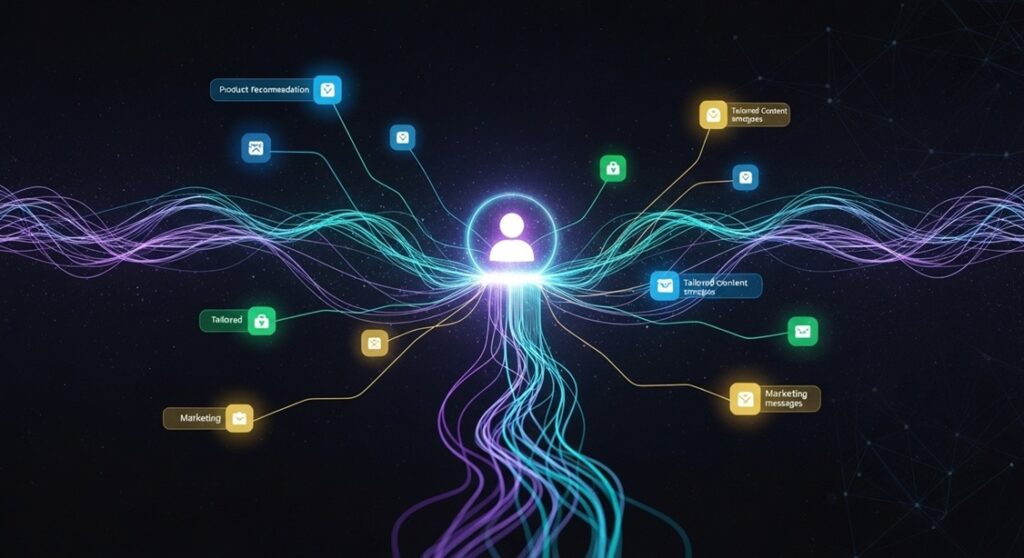
Personalization is key to winning customer loyalty. AI can segment your audience based on behavior, demographics, and preferences, allowing you to create highly personalized experiences. For instance, sending tailored recommendations based on a customer’s past purchases or browsing history. - Identifying Pain Points
AI can pinpoint bottlenecks in the customer journey that even the most thorough manual analysis might miss. Whether it’s a complicated checkout process or lack of communication at a critical stage, AI ensures no stone is left unturned. - Continuous Improvement
AI doesn’t just provide a one-time snapshot of your customer journey. It continuously learns and adapts, offering ongoing insights that help small businesses refine their strategies over time. This iterative approach ensures that your customer journey map remains relevant and effective.
How Small Businesses Can Leverage AI
Now that we’ve explored the benefits, let’s talk about how small businesses can start leveraging AI for customer journey mapping:
- Start Small
You don’t need a full-scale AI implementation to see benefits. Begin with a simple AI tool that focuses on one aspect of your customer journey, like chatbots for customer support or AI-driven analytics for your website traffic. - Choose the Right Tools
There are numerous AI tools designed specifically for small businesses. Platforms like HubSpot, Salesforce, and Zendesk offer AI-powered solutions that can help you map and enhance your customer journey. Do your research and choose tools that align with your business goals. - Focus on Customer Feedback
AI can analyze customer feedback from various sources, including reviews, social media, and support tickets. Use these insights to identify common themes and areas for improvement. - Monitor and Measure
Keep track of key performance indicators (KPIs) like customer satisfaction scores, conversion rates, and churn rates. AI can help you connect these metrics to specific points in your customer journey map.
The Future of Customer Journey Mapping
As AI continues to evolve, so too will its role in customer journey mapping. Small businesses that embrace these changes will find themselves better equipped to meet customer expectations and stay ahead of the competition. According to Forrester, companies that prioritize customer experience are likely to see a 20-30% increase in customer satisfaction and loyalty.
A Call to Action
The time to act is now. Whether you’re just starting out or looking to enhance your current strategies, AI offers unparalleled opportunities to transform your customer journey mapping efforts. Share your thoughts on how your business is leveraging AI in the comments below. Have you seen improvements in customer satisfaction or loyalty? We’d love to hear your story! For more insights on leveraging AI for business growth, visit AvenueForge.
#AI #CustomerJourneyMapping #SmallBusiness #DigitalTransformation